

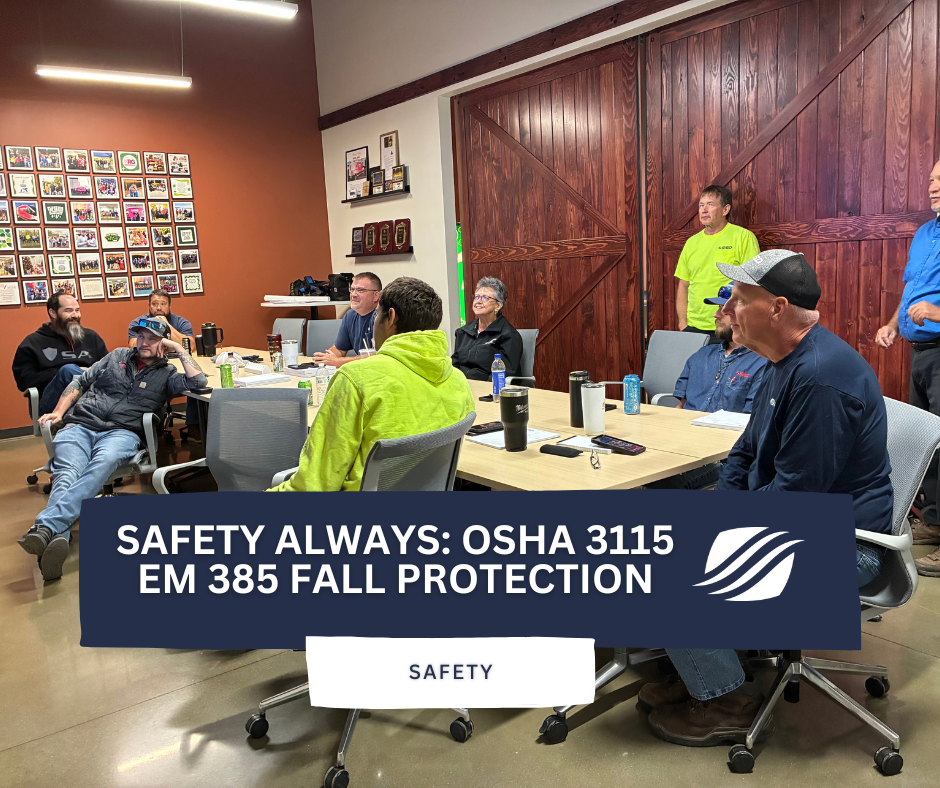
At MSD, safety is more than meeting a requirement. It is about making sure our people have the knowledge, training, and resources to protect themselves and one another every day on the job.
Members of our Special Projects team, foremen, and select journeymen recently participated in OSHA 3115 EM 385 Fall Protection training, led by Brenda Hawkey with ABC Ohio Valley/Mid-America OSHA Education Center.
This advanced, 26-hour course covers the OSHA Fall Protection Standard for construction while also meeting the U.S. Army Corps of Engineers EM 385 fall protection requirements, an important qualification for our teams performing work on base.
Preparing Our People for the Work Ahead
Fall protection is about much more than putting on a harness. Effective fall prevention starts before anyone leaves the ground.
Throughout the course, participants studied the principles of fall protection, OSHA standards and policies, and the components and limitations of fall-arrest systems. Hands-on workshops gave our team the opportunity to inspect and use fall-protection equipment while working through real-world applications.
The course also covered residential construction fall protection, employee training requirements, and the development and implementation of comprehensive fall-protection programs.
Upon completion, participants are better equipped to assess OSHA compliance, evaluate installed passive protection and fall-arrest systems, recognize potential hazards, and develop effective fall-protection plans.
Staying Ahead of New EM 385 Requirements
An important part of this year’s training was understanding updates to EM 385-1-1 Sections 21 and 24, which introduce new and revised requirements surrounding fall protection and safe access.
These changes address several areas our teams may encounter in the field, including updated training and refresher requirements, work platforms, fall restraint requirements for self-propelled elevating work platforms such as scissor lifts, roofing work during maintenance activities, and work performed over water.
The updated requirements also address ladderway openings, maintaining three points of contact while using ladders, equipping harnesses with trauma straps, and revised requirements for rope-access work.
Understanding these changes before arriving on the jobsite helps our teams remain prepared for the environments in which they work and reinforces the importance of continually developing our safety knowledge.
Training That Goes Back to the Field
Completing 26 hours of advanced training is an investment, but the greatest value comes from what our employees bring back to the jobsite.
Every foreman, journeyman, and Special Projects team member who completes this course strengthens the knowledge of the people working alongside them. They are better prepared to identify hazards, evaluate equipment, plan work at elevation, and understand when additional controls are necessary.
That knowledge supports a stronger safety culture across MSD and helps ensure our teams are prepared to meet the expectations of our clients and the unique requirements of the facilities we serve.
Preventing falls requires more than equipment. It requires planning, training, inspection, and accountability.
Before any task at elevation begins, our goal remains the same: assess the hazard, establish the right controls, and make sure everyone goes home safely.